thesis · flare gas · offgrid power
From Flare to FLOPS: Why Stranded Gas Is the Cheapest Power for AI
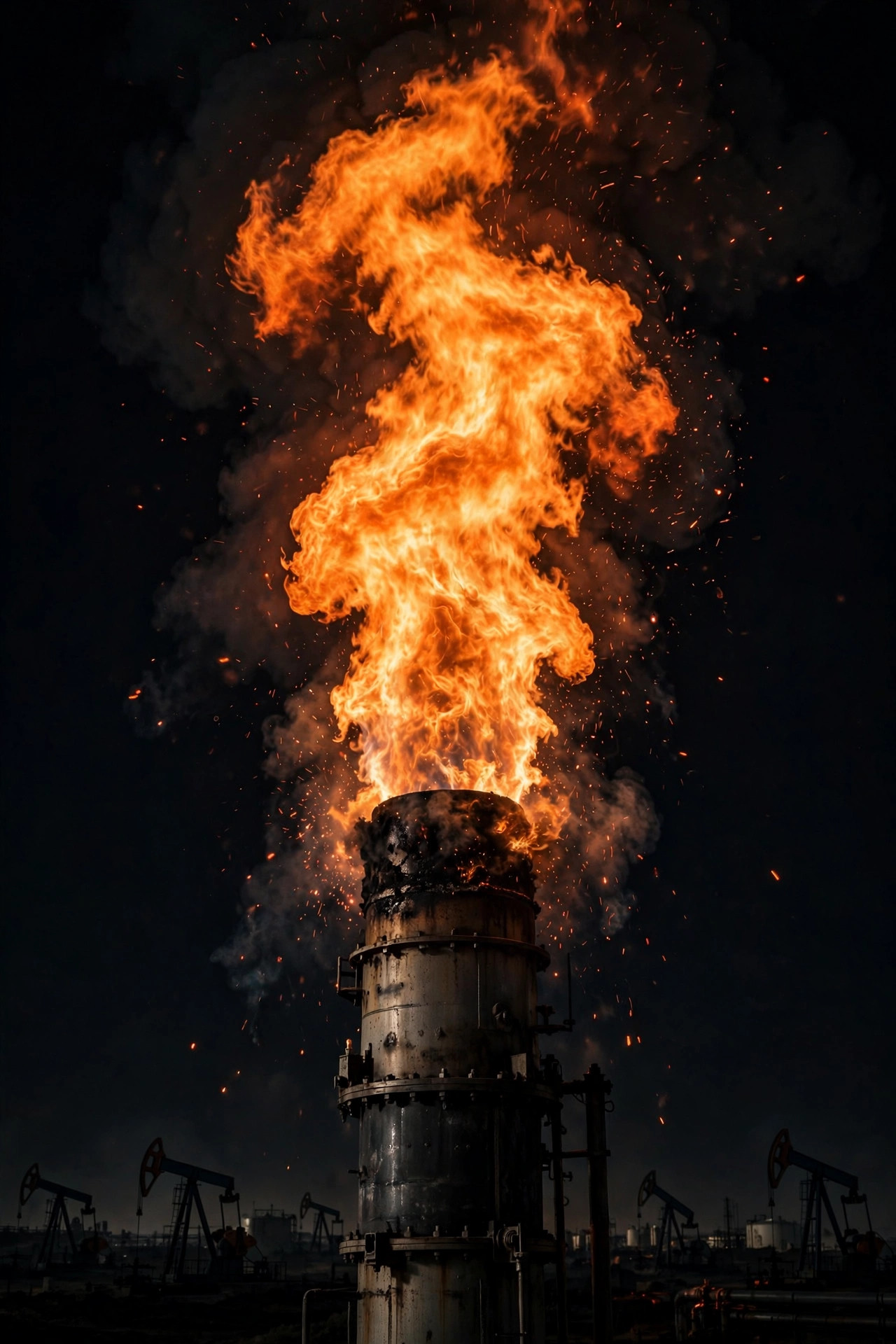
Every year, oil producers flare billions of cubic feet of associated gas — energy literally burned for nothing because there’s no pipeline to move it. Meanwhile, AI data centers face multi-year waits for grid interconnection. The FlareDC thesis is that these two problems solve each other.
The two queues
A data center developer’s scarcest input isn’t GPUs or land. It’s energized megawatts. In ERCOT alone, the interconnection queue ballooned to 474 GW against a ~90 GW peak — and Texas froze new large-load approvals in August 2026 (Governor Abbott’s directive, SB6 fallout). Transformers now quote 128–144 week lead times, with spot premiums on top.
A gas turbine or reciprocating engine parked next to a wellhead waits in no queue. Permitting is local, fuel is already there, and the “interconnection study” is a cable run.
What flare gas power actually looks like
- Fuel cost: near zero at the margin — the gas is currently flared, i.e., destroyed. Producers may even pay you to take the problem away (regulatory pressure on flaring is rising).
- Prime movers: aeroderivative turbines or large gas gensets, 1–50 MW blocks, containerized like everything else in this thesis.
- Emissions math: combusting methane in a genset emits CO₂, but flaring already does that while wasting the energy. Capturing the work is strictly better than the status quo — and methane slip regulations increasingly favor productive use over flaring.
Why this pairs with modular data centers
A flare site is not where you’d build a 10-year concrete data center. But a containerized module — power skid, cooling, racks, network — can be dragged in, connected, and dragged out when the gas declines. The container is the unit of deployment; the gas field is just the current address.
That’s the stack this site studies: stranded gas → containerized power → containerized compute → honest per-MW math. The next articles break down the costs.
← All articles